7 Evening Wear Mistakes That Undermine a Great Outfit
Quick Answer: Most evening-wear failures are fit and foundation problems, not dress problems. Sort your undergarments before anything else, get the gown properly tailored (formal lighting exposes every fit issue), choose one focal point instead of layering jewelry, and don’t let tired shoes or a mismatched bag undercut the outfit. Also plan for temperature, walking distance and the length of the actual event.
You found the gown. It fit in the store, you love the color, and yet standing in front of the mirror on the night, something is off.
It’s almost never the dress. It’s four or five small things that nobody photographs individually but everybody registers collectively.

Why do small details matter so much in evening wear?
Because formal lighting is unforgiving in a way daytime isn’t.
Event lighting is usually directional and often bright — overhead spots, uplighting, flash photography. Directional light finds every pucker at a seam, every strap line, every place where a hem hangs unevenly. The same dress under diffuse daylight looks fine.
Add photography, and everything gets a second, permanent examination. Daywear gets forgiven. Evening wear gets documented.
Which is why the detail work isn’t fussiness — it’s the difference between “she looked lovely” and “she looked incredible,” and the gap is usually about $60 of tailoring and twenty minutes of planning.
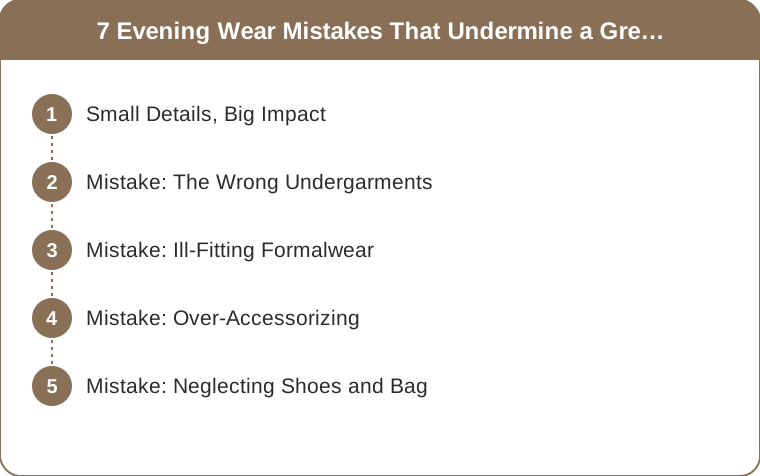
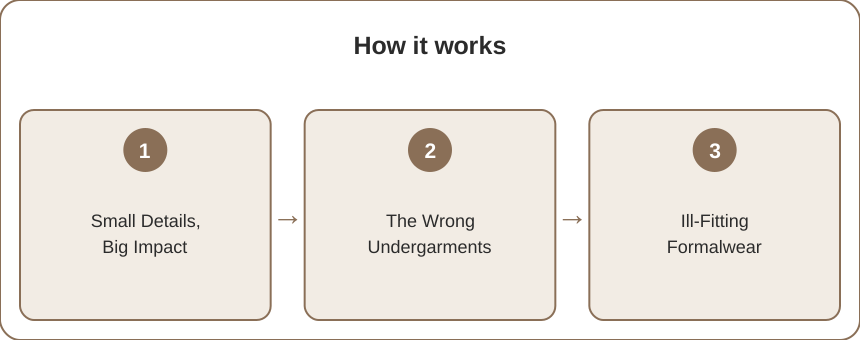
Mistake 1: The wrong undergarments
This is the most common and the most fixable.
Visible lines, straps that don’t work with the neckline, or support that gives out halfway through the evening will undermine a beautiful gown completely. Sort this before anything else — ideally before the final fitting, so the tailor is fitting the dress over what you’ll actually wear.
What to check: seamless under anything fitted, the correct bra style for the neckline (strapless, adhesive, convertible, or a built-in cup), and whether smoothing pieces are genuinely comfortable for four to six hours, not just for the two minutes you tried them on.
Test it seated. Most foundation failures show up when you sit down, not when you stand.
Mistake 2: Skipping the tailoring
Evening wear demands precision fit, and even a small issue shows under formal lighting.
The three alterations worth almost every time: hem to your actual shoes (this is the biggest one — a gown hemmed for the wrong heel height ruins the line), take in the bodice or straps so nothing gapes when you move, and adjust the waist so it sits at your natural waist rather than an inch off.
Budget for it. A $200 dress that’s tailored beats an $800 dress that isn’t, consistently and visibly.

Mistake 3: Over-accessorizing
A statement gown is already the statement. Adding a statement necklace, statement earrings, a cuff and a bold clutch means five things competing and none of them winning.
Choose one focal point. If the dress has an interesting neckline, skip the necklace and wear earrings. If the dress is simple, that’s when jewelry gets to do the talking.
The test before you leave: name the one thing you want people to notice. If you can name three, remove two. Restraint reads as elegance because it reads as decision.
Mistake 4: Neglecting shoes and bag
The finishing pieces are the ones people skip, and they’re disproportionately visible.
Shoes: scuffed heels, worn soles and shoes that were fine two years ago all show. A $12 heel-tip replacement is the highest-return maintenance in your wardrobe. And whatever you choose, walk in them at home for an hour first.
Bag: an evening bag should be small and deliberate. A daytime handbag with a gown reads as an afterthought because it is one. If you don’t own one, a simple clutch in a neutral or metallic covers essentially every event you’ll attend.
Mistake 5: Ignoring the logistics
The three that catch people out most:
Temperature. Venues are almost always colder than expected, and outdoor portions are colder still. A wrap, a fine shawl or a tailored coat you’re happy to be photographed in solves it. Shivering through cocktails is not a look.
Distance. Count the actual walking — parking to venue, venue to reception, standing during photos. If it’s more than a few hundred yards, either the shoes change or a backup pair goes in the car.
Duration. A dress that’s perfect for two hours can be genuinely uncomfortable at hour five. Sit, walk, raise your arms and take a deep breath in it before you commit.
And a practical one: getting to the event. Changing at the venue is common for a reason — travel in buttery soft high waist leggings and a soft top, then change into the gown once you’re there. Arriving uncreased beats arriving on time in a wrinkled dress.
Mistake 6: Getting the dress code wrong
Black tie, cocktail, formal and “festive” are genuinely different, and guessing wrong is more uncomfortable than any shoe.
If the invitation is vague, ask the host or someone else attending. Nobody has ever been annoyed by that question, and everybody has felt the specific discomfort of being the only person in a floor-length gown at a cocktail-length event.
Mistake 7: Doing everything on the day
The final and most preventable one. Trying the complete look — dress, undergarments, shoes, jewelry, bag, outerwear — for the first time on the evening itself is how problems get discovered when there’s no time to fix them.
Do a full dress rehearsal at least three days out. Photograph yourself in it, seated and standing. The camera catches things the mirror doesn’t, and three days is enough time to fix almost anything you find.
FAQ
What should I wear under a fitted evening gown?
Seamless, well-fitting foundations chosen for that specific neckline, tried on with the dress before the final tailoring appointment. Sit down in them — that’s where problems appear.
How much should evening wear alterations cost?
A hem typically runs $30 to $60, bodice or strap adjustments $40 to $100, depending on the fabric and complexity. It’s the highest-return money in the whole outfit.
How do I know if my outfit is over-accessorized?
Name the one element you want noticed. If you can name three, you have three. Remove until one clearly leads.
TL;DR:
- Foundations first, fitted before the final tailoring, tested seated.
- Tailor the hem to your actual shoes — it’s the single biggest fit variable.
- One focal point. Name it before you leave; remove until only one leads.
- Refresh the shoes, carry an actual evening bag, and plan for cold venues and long walks.
- Full dress rehearsal three days out, photographed. The camera catches what the mirror won’t.
Keep Reading
This article is for general styling and informational purposes only. Trends, sizing, availability and pricing may vary by brand and season.